
As difficult as it is for me to believe, this September marks the 25th anniversary of 9/11. One of the people we lost that day was Mychal Judge, the late New York City Fire Department Chaplain and a Catholic priest. Like so many New Yorkers are, Fr. Judge was an iconoclast. Despite having taken a vow of celibacy, he was a gay man in a long-term relationship with an active AIDS ministry. He also had a curious habit of going to FDNY celebrations and proclaiming to all the firefighters there (and anyone else who happened to be present), “All your sins are forgiven!” By widespread account, he said it with real feeling and deep conviction.
Fr. Judge had repeatedly been told to stop that public practice, since as a priest, he was beholden to Catholic sacrament of reconciliation, which required individuals to make their confession and perform penance. But he persisted in it, explaining that he never wanted a single firefighter to doubt forgiveness itself. His last FDNY event was the last for several others attending it as well, and at it, he again declared: “All your sins are forgiven!” Not too long afterwards, he became the first certified mortality at the World Trade Center; the photo of first responders carrying the chaplain’s body out of the North Tower soon appeared in news outlets around the world.
In the years since his death, many have lobbied for his canonization as a matryr for the faithful. Fr. Judge did not evacuate the tower when he was told to do so because he knew that there were injured firefighters inside who would want to receive last rites, as an assurance that they had been granted the absolution of sin and the blessing of apostolic pardon. The seriousness of his commitment to extending others forgiveness was such that he would run in to a burning building to promise it to them. Although the lobbying for Fr. Judge has continued a couple of decades now, there is still no official cause for his sainthood in the Roman Catholic church.
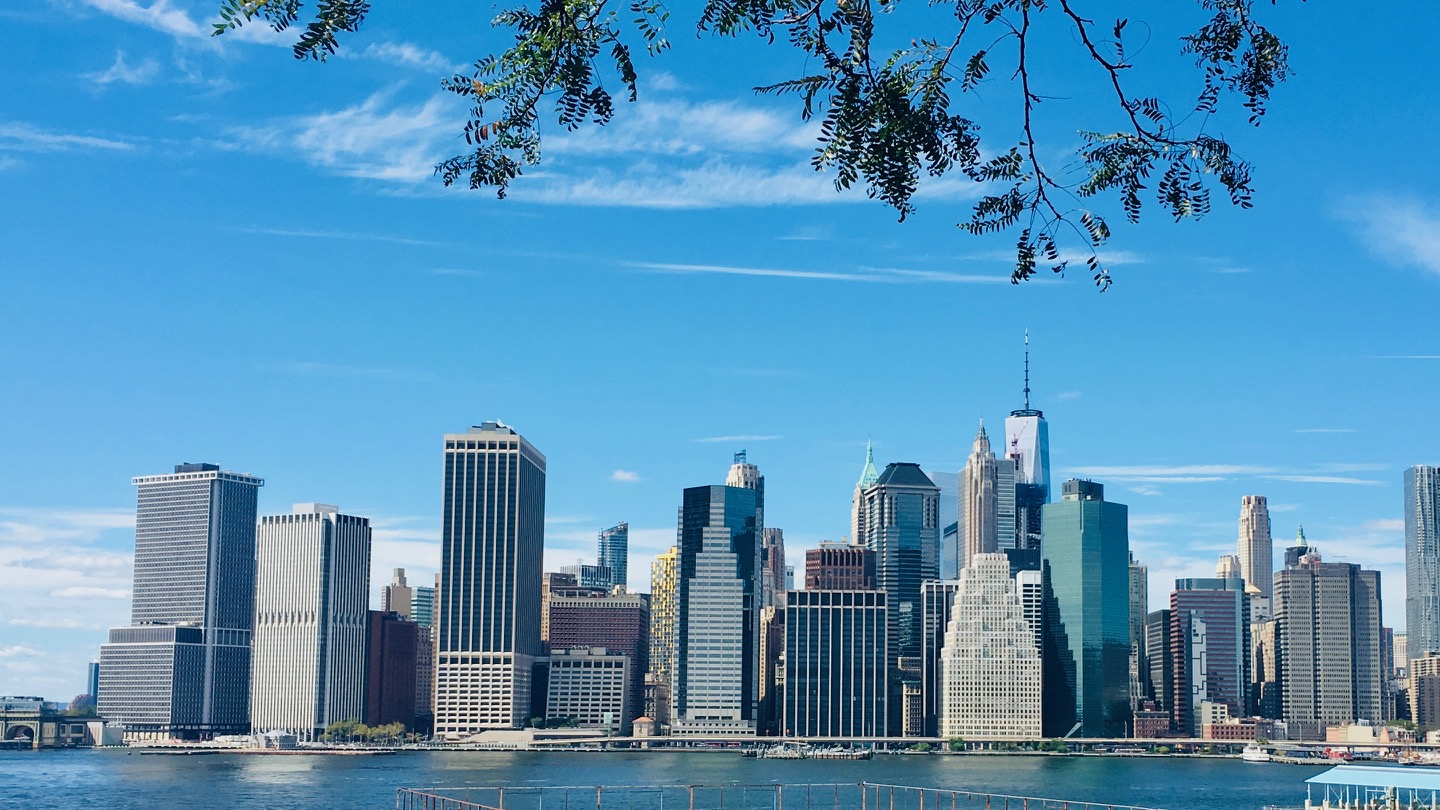
Whether Fr. Judge will eventually be sainted remain an open question, but whether he himself was saintly seems to me a question that has already been decided. These days, we could all use a patron saint of forgiveness. We live in particularly unforgiving times.
There are several markers of this in the United States today, including the increased rates of family estrangements, the rise in numbers of renounced friendships and other relationships in response to intensified political polarization, and the dire social and material consequences of inhabiting so-called “cancel culture”. Nearly all of us are caught in algorithms that run on fomenting fear and widening social division, on platforms that profit from people on the left and right and all across the political spectrum doomscrolling and demonizing the opposition. Cut-offs are becoming the custom of this country. We American are not very kindly disposed toward forgiveness; a mood of enmity and grievance pervades the nation.
Meanwhile, the academic field known as “forgiveness studies” continues to grow exponentially. Across disciplines, researchers have been compiling data points about forgiveness and demonstrated its considerable mental and physical health benefits. It turns out that forgiveness is not just a good idea; it is good public health practice that contributes to reports of fuller human flourishing. Newer and varied protocols of forgiveness such as the REACH model have made their way into clinical and community settings alike, allowing people to get a better sense of the processes involved in forgiving others and being forgiven themselves. Of course, world religions and assorted wisdom traditions have preached the practice of forgiveness for millennia, the love of enemy dwelling alongside the love of neighbor, but they did so on purely spiritual grounds. They were not building upon the expanding science base.
In his 2002 book On Forgiveness, Scottish writer and former Anglican priest Richard Holloway notes “that religion has been the container of some important human discoveries that are still vital to us” today, including the need all of us have both to forgive and be forgiven. In 2000, Halloway resigned from his position as the Bishop of Edinburgh in protest over the failure to fully include LGBTQ individuals into the fold of the Scottish Episcopal Church. Following that departure, he described himself as an “after-religionist”, one who has been very public about his personal agnosticism and skepticism. Yet he sees tremendous value, he writes, in “the great religious themes of hope and forgiveness… for the whole human community”, apart from any sectarian interests.
According to Holloway, “we can value forgiveness for its own sake, even if we are no longer comfortable with the theological packaging it comes in.” As he observes: “If justice is one of the fundamental principles of true religion, then forgiveness… is its essential counterpart, its necessary antithesis. If our passion for justice can sometimes trap us in war and bitterness,” he adds, “then it is forgiveness that can sometimes help to rescue us,” often from the dangerous grip that intense emotions have on us.
If forgiveness were a easy exercise, we would not need to make such a close study of either the science or spirituality of it. At its most rudimentary, forgiveness means surrendering our drive toward revenge. Even what we dub retributive justice – outlined in some more stringent religious codes along the line of “an eye for an eye, a tooth for tooth” – was meant to ensure a proportional response, meting wrong for wrong in equal measure, so that a petty theft, say, did not result in summary execution. When we forgive someone, it does not mean that we want them spared the consequences of their actions or freed from penalties that societies impose upon transgressors with valid reason. It does, however, mean that we do not avenge ourselves in anger. The Rev. Dr. Martin Luther King often reminded Americans that “the old law of ‘an eye for an eye’ leaves everybody blind.” We see that an awful lot of that blindness these days.
Sometimes even rudimentary forgiveness proves incredibly challenging, because it is required most commonly in cases of grievous injury. The subtitle of Halloway’s book is actually a question: How Can We Forgive the Unforgivable? We have to understand that forgiveness does not ask us to excuse inexcusable acts. Instead, it asks us to recall the basic humanity of people who have acted horrendously.
What Halloway calls “conditional forgiveness” is the kind of forgiveness we can easily imagine. It involves a process of restorative justice, where wrongdoers admit the extent of their wrongdoing and acknowledge the impact it has had on us and others. There are expressions of remorse; in certain cases, reparations are made. An attempt is made to stay in right relation, and the wronged parties accept that attempt at restoration sincere.
Yet we may never be wholly reconciled with those we have forgiven, nor should we necessarily expect that. Most of our relationships persist through a series of ruptures and repairs, but sadly, not every rupture can be repaired. Occasionally relationships remain intact precisely because they have grown distant. If trust is successfully re-established and even deepened over time, certain close relationships may grow even closer. This closeness can be earned in our marriages and families, in our friendships and working relationships, in our local community and in our country; it can feel all the more precious for being hard-won.
A lot shifts for people if they trust they can and will be forgiven. They are suddenly more inclined to be forgiving themselves. I was raised in an Irish Catholic family that was fairly unforgiving, where estrangements were routine and grievances rarely forgotten. Perhaps you’ve heard that joke about Irish amnesia, where everything is forgotten except the grudge. My family suffered from that, and the emotional impact of that was damaging to all of us, although I did not realize just how damaging it was until well into my adulthood. Because no one ever forgave, no one was ever forgiven. We lost so many opportunities across the generations and severed so many cherished connections.
Forgiveness is counterinstinctual for most of us, honestly. We just do not ordinarily want to do it. Our inborn negativity bias is continuously at work in our brains, reminding us of precisely where we were injured and who insulted us in the past and how we were denied justice by the system and when our future was foreclosed at that crucial time. The catalogue of all the ways the world and its habitants are unfair is enormous; there can be no overlooking that. Holding on to unforgiveness can feel like a principled protest, perhaps, or an act of self-preservation, or a keen hypervigilance that helps us keep all that we hold dear safe from harm. We can forgive others when the score is even, we tell ourselves, or they have paid us what we are owed for their transgressions and we are eventually made whole. But perfect justice is too often illusory. We could wait ages and it still might not arrive. So what happens in the meanwhile?
The historic Universalist faith community that acted as the sponsoring congregation for my ordinaton to Unitrarian Universalist ministry of began simply as my home church. When I first stepped through its doors, it seemed I had accidentally passed through some mystical portal to mercy. I was raised with the threat of damnation, believing that certain people would never and could never be forgiven, and I unconsciously feared that I might be one of them myself. That Universalist church relieved me of some deep-seated fears that I did not know beset me. Its religious testimony was ultimate forgiveness and undying love; it made a convert out of me and it changed my life in ways I am continuously working to comprehend.
Researchers are now beginning to explore the psychological effect of a phenomenon they call Divine Forgiveness. What they are finding is that people who embrace a God concept that is forgiving, that is merciful and reconciling, trust more and more in forgiveness not only as a possibility but as a promise.
Part of the religious inheritance of our Universalist tradition is its insistent witness to the final forgiveness of everyone by a God of everlasting love seeking to save every soul, a God forbidding that any soul should be lost to perdition. This belief put Universalists at odds with other Christian sects claiming doctrines of eternal damnation. They always allowed for holy forgiveness. Their beliefs scandalized their neighbors in early America, who considered Universalists morally compromised and ethically dubious, at best heterodox and and at worst heretical, and certainly unfit for jury duty.
What Universalists were offering people in the pews was not so very different from what Fr. Judge was offering New York’s Bravest. Both extended what Halloway characterizes as “unconditional forgiveness”. As such, it is not dependent upon a process or a confession, clear goodwill or even a degree of regret. “All versions of conditional forgiveness, no matter how just, creative, and releasing are essentially tactical, designed to limit or manage the damage that we do to one another,” Halloway observes. “Pure forgiveness is not an instrumental good, a prudent management or a damage limitation exercise; it is an intrinsic good, an end in and of itself, a pure gift offered with no motive of return.” Yet we routinely question the motives behind “pure forgiveness,” considering them somehow suspect.
Attempting such “absolute forgiveness” requires a certain “moral confidence”, Halloway suggests, a trust that magnanimity indeed exists; “radical forgiveness is its own meaning,” he concludes. “We rarely see this kind of joyful mercy at work in human history, but when do, it has enormous redemptive value. It is one of the few things that are able to break the circuit of evil…” One classical theological definition of evil is anything that actively seeks to separate us from love, either love for others or ourselves or the world. Forgiveness can help restore us to love.
“For losing sight of our unity,” we repeated in the Litany of Atonement we recite in our congregations, “we forgive ourselves and each other; we begin again in love.” A beautifully paradoxical insights in Halloway’s extended meditation on forgiveness is that we ourselves can be forgiven an initial refusal or ongoing resistance to forgiveness. Many of us have people we are convinced we could never forgive. Time will tell if we are right. We might eventually develop a stronger capacity for forgiveness that we originally anticipated.
We are regularly asked to be forgiving because we regularly need to forgiven. If we are told that we are loved and valuable, we begin to believe that we matter beyond the total sum of our errors; that we have the potential to grow and evolve as people; that we can repair some of the harm we have done in our lives; that we will be encouraged and perhaps expected to improve. So we need to not disqualify one another too handily, and we must learn to forgive ourselves, too. For some people, self-forgiveness may actually be the toughest task.
One of the simplest interventions I used with clients in my private psychotherapy practice who felt unforgiven did not belong to any elaborate forgiveness protocol. It was only an off-handed, gentle observation that faced with a similar circumstance today, my clients would almost certainly make alternate choices. This served to remind them that they had learned something invaluable about the kind of life they wanted to lead. They had made and were continuing to make amends by choosing differently than they had before.
The late American theologian Reinhold Niebuhr, who is perhaps best known for penning the Serenity Prayer recited by Alcoholics Anonyous and a number of other Twelve-Step fellowships, insisted: “Nothing we do, however virtuous, can be accomplished alone; therefore, we are saved by love. No virtuous act is quite as virtuous from the standpoint of our friend or foe as from our own. Therefore, we are saved by the final form of love which is forgiveness.” What if we understood forgiveness in his terms, as that final and highest form of love?
Those working in forgiveness studies have given us standardized interventions and study findings and free workbooks, but there will have limited utility if we cannot sincerely embrace forgiveness as a worthwhile endeavor. In the forgiveness classes that I teach both for the Psychotherapy & Spirituality Institute in New York and for the Spirituality & Flourishing group in the Harvard Flourishing Network, I rely on the REACH model, which asks people to identify their own so-called “forgiveness heroes”, be they living or dead, historical or fictional, public or private figures — it matters little. Take a moment to consider who yours might be. They do not have to people like Fr. Judge or Nelson Mandela or the Dalai Lama; their names may never make headlines.
Yet people who forgive are always brave and they encourage us to take take personal risks similar to theirs. Recently, the Soul Matters packet for our themed group ministry asked a series of “why not?” questions, including: “Why not give people another chance? Why not fight what seems like a losing battle? Why not risk a little failure? Or forgiveness?” Why not, indeed? When people ask me whether they should bother with the hard work of forgiveness at all, I usually reply with an unsatisfactory why-not question of my own. Why not try it? Frankly, I say, it is far better than the alternative: unforgiveness, with its considerable, at times catastrophic human costs. Why not attempt it now, this month and near the start of the Jewish High Holy Days including Kol Nidre and Yom Kippur, in what might easily qualify as a season of forgiveness? Practicing forgiveness is such a valuable coping skill; it can help us with some vital life management.
The Archdiocese of New York had yet to put Fr. Judge’s name forward for sainthood; it may never, since it is not in the habit of commending renegade clerics to the Vatican. But the city did rename a portion of West 31st Street near to his old friary “Father Mychal F. Judge Street” in his honor. Now, every year, on one Sunday morning in early September, there is a 9/11 walk of remembrance that begins there and winds down the route Fr. Judge took to Ground Zero. We may never take that memorial walk or even stroll down his street, but I do think think there’s a case to made for walking in his footsteps. Wouldn’t it be wonderful if forgiveness started to seem increasingly less saintly and instead became increasingly more pedestrian? What if we, as people of faith and goodwill, were part of that larger movement?


